
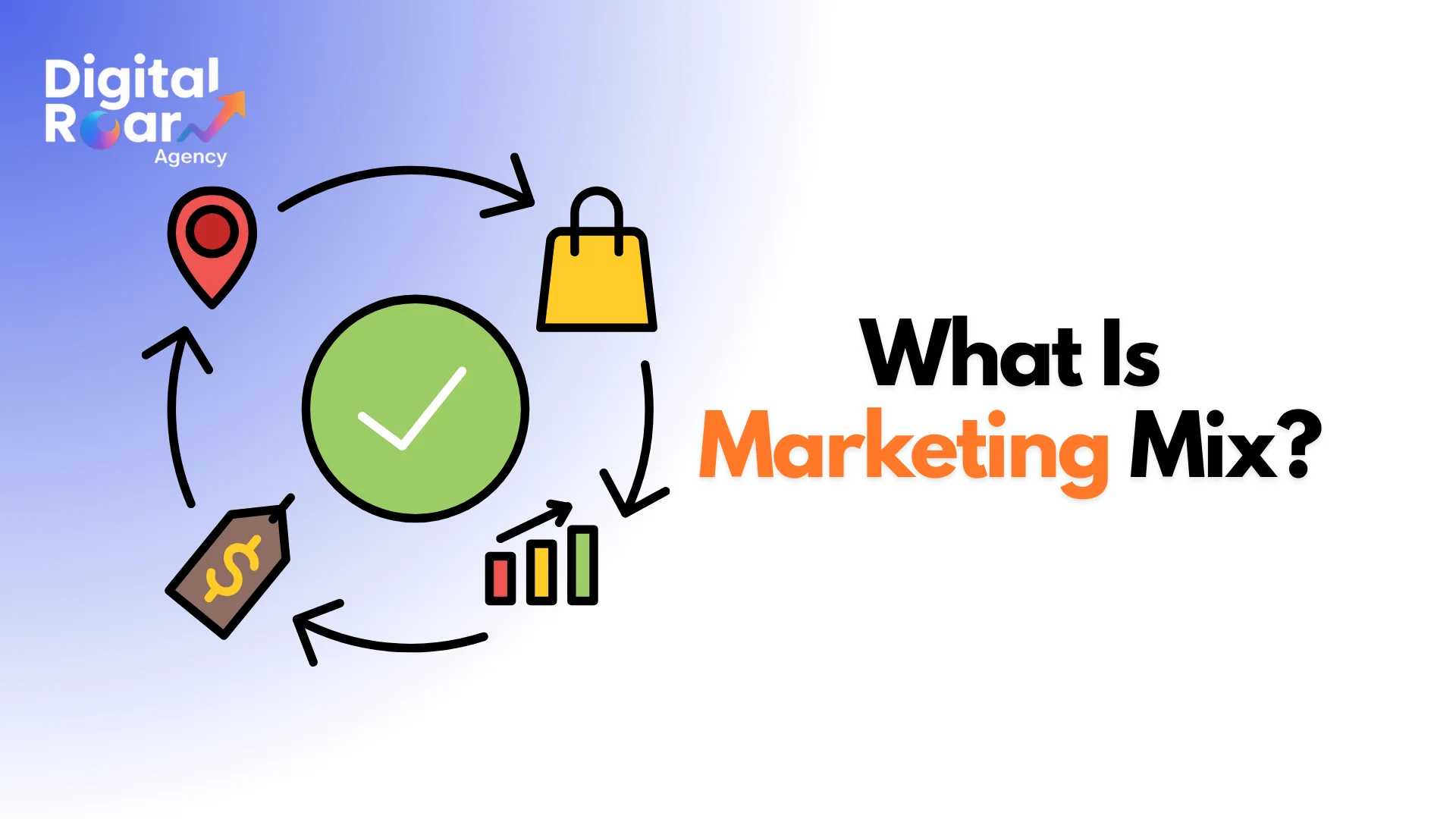
One of the most essential bases in marketing and business strategy understanding is what is marketing mix. As a student, an entrepreneur, a founder of a startup, or a marketing professional, the marketing mix can give you a framework of the way your product or service gets to customers and brings in a revenue stream.
In its most basic form, the marketing mix enables organizations to respond to four key questions: What are we selling? How much should we charge? Where should we sell it? And how do we promote it? As time has passed this framework has developed since the traditional 4Ps model into the more detailed 7Ps model or rather service based companies.
This detailed guide will identify what is the marketing mix, the functioning of the marketing mix in practical situations, why the marketing mix is still applicable today, and the relationship between the marketing mix and terms such as what is a mixed market economy. At the end, you will clearly know how to create a strong marketing mix strategy.
Table of Contents
What Is Marketing Mix?
When you ask yourself what is marketing mix in marketing, the answer is simple, yet powerful. The marketing mix is a bundle of controllable controllable variables that a company employs to manipulate customer demand and meet its marketing goals.
That is, it is a toolkit with which businesses can design and present value to their target audience. These are tools that are grouped into particular categories so as to have a structured and strategic approach, instead of haphazard marketing choices.
When a person enquires about what is a marketing mix is they are referring to this coordinated blend of marketing components which collaborate to promote sales and brand awareness.
The concept of marketing mix gained popularity in the mid 20th century and has soon become one of the most commonly taught marketing models in higher education institutions across all parts of the world. Even with the altered technology and consumer behavior, the marketing mix is still very applicable since it relates to the essentials of business exchange: value creation and effective communication.
The Origin and Evolution of the Marketing Mix
The marketing mix was first presented as a combination of variables that marketers could manipulate. It has been reduced over the years to four core components that are the 4Ps. The four categories assisted businesses to structure their marketing decisions into a manageable and strategic framework.
Marketers found that the traditional 4Ps were inadequate as the nature of industries particularly services-based industries like the banking sector, hospitality, consulting and health care. This saw the emergence of the extended marketing mix model, the 7Ps, that incorporated three more components to improve service delivery and customer experience.
Companies today employ both models depending on the industry and marketing objectives.
The 4Ps of the Marketing Mix
The classic marketing mix is composed of four essential components, which include Product, Price, Place, and Promotion. The four elements should be coordinated to form a coherent and attractive value proposition.
Product
The marketing mix centers around the product. It is said to be the goods or services provided to customers to fulfill a need or address a particular problem.
Businesses need to look beyond the physical thing when creating the product component of the marketing mix. They should take into account design, quality, branding, packaging, features, warranties, and customer care. A product is not what customers purchase, it is the overall experience they get.
As an example, a smart phone is not merely characterized by hardware. Its perceived value is based on its operating system, brand reputation, customer service, design, and user experience.
A clear product matches customer expectation and is distinct compared to rivals. Without the product satisfying the needs of the market, even a favorable promotion or pricing plan will not produce long-term success.
Price
Price is the price that the customers are ready to pay on the product or service. It has a direct impact on revenue, profitability, brand positioning and customer perception.
Pricing is not merely about computing the cost and marking it up. Companies have to take into account the competitive pricing, perceived value, elastic demand and the ability of the target audiences. As an illustration, premium brands tend to set higher prices as a gesture of exclusiveness and quality whilst budget brands focus on affordability to gain market share.
Purchasing behavior is also affected by psychological pricing such as charging at 9.99 rather than 10. Promotions such as discounts, packages, subscription plans, and season discounts also influence customer value perception.
The appropriate pricing approach reinforces the positioning of the product and makes it sustainable in the long term.
Place
Place involves the manner and location at which the product is offered to the customers. It involves channels of distribution, logistics, inventory, and coverage of markets.
Place could be used in traditional marketing to denote physical shops or retail outlets. It incorporates online platforms, e-commerce websites, mobile apps, and international marketplaces today.
It is the responsibility of a firm to ensure that its product is at the point where its target market would like to purchase it. As an example, online shopping might be more popular among younger consumers, and some luxury brands might have exclusive retail outlets to safeguard their brand image.
Distribution efficiency elevates customer convenience, accessibility of brand, and sales potential.
Promotion
Promotion encompasses all the communication efforts employed with the aim of informing, persuading and reminding customers about the product.
This aspect includes advertising, digital marketing, public relations, sales promotions, influencer collaborations, email marketing, and content marketing. Promotion creates brand awareness and customer action.
The promotion in digital age is more quantitative and mathematical. Businesses are able to track the click through rates, conversion rates, and engagement metrics to optimize its campaigns.
But promotion is not only about visibility. It should also be relevant to the value proposition of the product and reach the appropriate audience with the appropriate message.
The Extended Marketing Mix: The 7Ps Model
Three extra components were introduced to the 4Ps as marketing ventured into service sectors. These are People, Process, and Physical Evidence.
People
People are the face behind all those involved in the delivery of the product or service to the customers. This covers the employees, sales representatives, customer service personnel, and management teams.
Customer interaction is very important in service-based industries, which affect brand perception. Customer satisfaction and loyalty can be greatly enhanced by having a friendly and knowledgeable support team.
Firms pay a lot of money to train workers and internal culture as employees are the direct cause of customer experience.
Process
Process is the systems and procedures that bring about the service or product. It encompasses order fulfillment, payment systems, customer support processes, and service delivery processes.
Effective operations enhance regularity and dependability. To illustrate, when customers checkout online quickly and easily, they are more satisfied and cart abandonment rate goes down.
Good processes also ensure that businesses can increase their operations without any form of undermining.
Physical Evidence
Physical evidence is a tangible indicator that customers are confident in the quality of a service. It can cover store design, online design, packaging, uniforms and branding materials.
Website design and user interface is important physical evidence of professionalism and credibility in digital businesses.
These extra points render the 7Ps model especially helpful in the field that is highly dependent on the customer experience.
Real-World Marketing Mix Example
In order to see correctly what is the marketing mix, assume a real-life case of a new organic skincare brand entering the market.
The product will feature chemical-free products, ecologically friendly packaging, and formula that has been tested by the dermatologist. The brand establishes itself as safe and sustainable.
The price will be offered a bit above the mass-market brands to represent high quality, but lower than the luxury competitors to make it affordable.
The place strategy is centered on online sales via the company web site and some chosen eco-conscious retail locations.
The promotion plan involves social media marketing, collaboration with skincare influencers, educational blog posts, and targeted digital advertising.
All the elements are supportive of others. This premium pricing is associated with quality ingredients. Environmentally friendly package supports brand values. Promotional message focuses on sustainability and health.
This correspondence illustrates the importance of the marketing mix in building brand consistency through a strategically designed marketing mix.
How to Develop an Effective Marketing Mix Strategy
The marketing mix involves research, analysis and strategic thinking. It starts by understanding the target market. Companies need to study demographics, buying habits, tastes, and pain points.
After identifying the target audience, the product must be developed to address a certain issue or a need. Positioning is enhanced by clear distinction among competitors.
Pricing should be determined to give away profitability and competitiveness. Companies usually undertake market research to trial pricing models prior to launch.
Customer shopping habits must be considered in channels of distribution. An online-oriented audience can demand a robust e-commerce strategy.
Lastly, data-driven insight should be employed in promotional strategies to identify the most efficient communication channels.
Constant tracking and optimization make sure that the marketing mix responds to changes in the market and changes in customer expectations.
Advantages of the Marketing Mix
The marketing mix provides order and transparency in marketing decisions. It makes certain that companies will not rush into the market with products without care.
It enhances the strategic planning process by integrating product development, pricing, distribution, and promotion. It also boosts competitive positioning by promoting differentiation.
Above all, the marketing mix assists companies in being customer-centric by analyzing the value delivery aspect of each component.
Limitations of the Marketing Mix
The marketing mix has its weaknesses despite its strengths. It was initially created to be used in product-driven companies and might not accurately represent the contemporary digital nuances.
It may at times simplify the behavior of consumers, which is affected by psychological and social aspects outside of 4Ps.
Also, the fast-evolving digital platforms need more adaptable systems that incorporate data analytics and personalisation.
This is why the main reason why most contemporary marketers integrate the marketing mix with customer-centric models.
What Is a Mixed Market Economy?
Other individuals may be confusing about what is a mixed market economy and the model of a mixed market economy yet these are completely different.
A mixed market economy is a type of economy that consists of both business sector and government regulation and intervention. In these types of systems, private enterprise and the government affect the economy.
Nations such as the United States and the United Kingdom use mixed market economies. This is not a marketing strategy, but a concept of national economic organization.
Marketing Mix vs Mixed Market Economy
Marketing mix is a business-level strategy that is utilized to control marketing decisions. A mixed market economy refers to a macroeconomic system, which characterizes the way the economy of a country is run.
The realization of this difference helps in avoiding confusion in the study of business and economic terms.
Marketing Mix in the Digital Age
The marketing mix is very relevant in the current digital environment. Its use however has changed.
Online courses and subscriptions programs are examples of digital products that demand new pricing models like freemium or tiered subscriptions.
Place now incorporates global online distribution and instant downloads. The promotion is highly dependent on SEO, social media marketing, pay-per-click advertisement, and email automation.
Regardless of technological shifts, the marketing mix logic is the same: provide the appropriate product at the appropriate price, in the appropriate place, with the appropriate promotion.
Conclusion
What is marketing mix is a question that needs to be understood in order to develop effective marketing strategies. The marketing mix, as an expanded version of the traditional 4Ps, offers a systematic method to match decisions of the business to the needs of the customers.
It is used to maintain uniformity in the processes of product development, pricing, distribution channels, and promotional activities. Although it has been modified as time went by, its essence has always been the same, that is, assisting business in creating and communicating value.
Learning the marketing mix allows the companies to enhance brand positioning, customer satisfaction as well as attain sustainable growth in the competitive markets.
FAQs About What is Marketing Mix?
What is marketing mix in marketing?
The marketing mix is a strategic framework that businesses use to promote and sell products or services. It typically includes four main elements: product, price, place, and promotion. These elements work together to help companies reach their target audience and achieve marketing goals effectively.
What are the 4Ps of the marketing mix?
The 4Ps of the marketing mix are Product, Price, Place, and Promotion. Product refers to what a company sells, price refers to how much customers pay, place refers to where the product is sold, and promotion refers to how the product is advertised and marketed.
Why is the marketing mix important?
The marketing mix is important because it helps businesses create a balanced marketing strategy. It ensures that the product, pricing, distribution, and promotion are aligned with customer needs, which improves customer satisfaction and increases sales.
What is a marketing mix example?
A marketing mix example could be a company selling a fitness tracker. The product would include health-monitoring features, the price would be set competitively, the place would include online stores and retailers, and promotion would involve social media advertising and influencer marketing.
What is the difference between marketing mix and marketing strategy?
The marketing mix focuses on specific tools like product, price, place, and promotion, while marketing strategy focuses on long-term goals and market positioning. The marketing mix is a part of the overall marketing strategy.